
The best gold bars to buy are plain, widely recognized bars from a big-name refiner, bought from a dealer you’ve checked out, at the lowest markup over the gold price you can find.
The brand matters less than you’d think.
An ounce of gold is an ounce of gold. What a well-known name gets you is a bar that’s easy to sell later, because every dealer knows it on sight, and that’s worth something on the day you need the money back and don’t want to haggle over whether your bar is real.
And before you buy anything: gold is not a safe bet. The price moves up and down like any other investment, and you can lose money on it. Don’t put in cash you’ll need soon. New to investing? Start with how to invest $1,000 and our other smart money guides.
Here are five brands you’ll run into at almost every online dealer, and what to know about each.
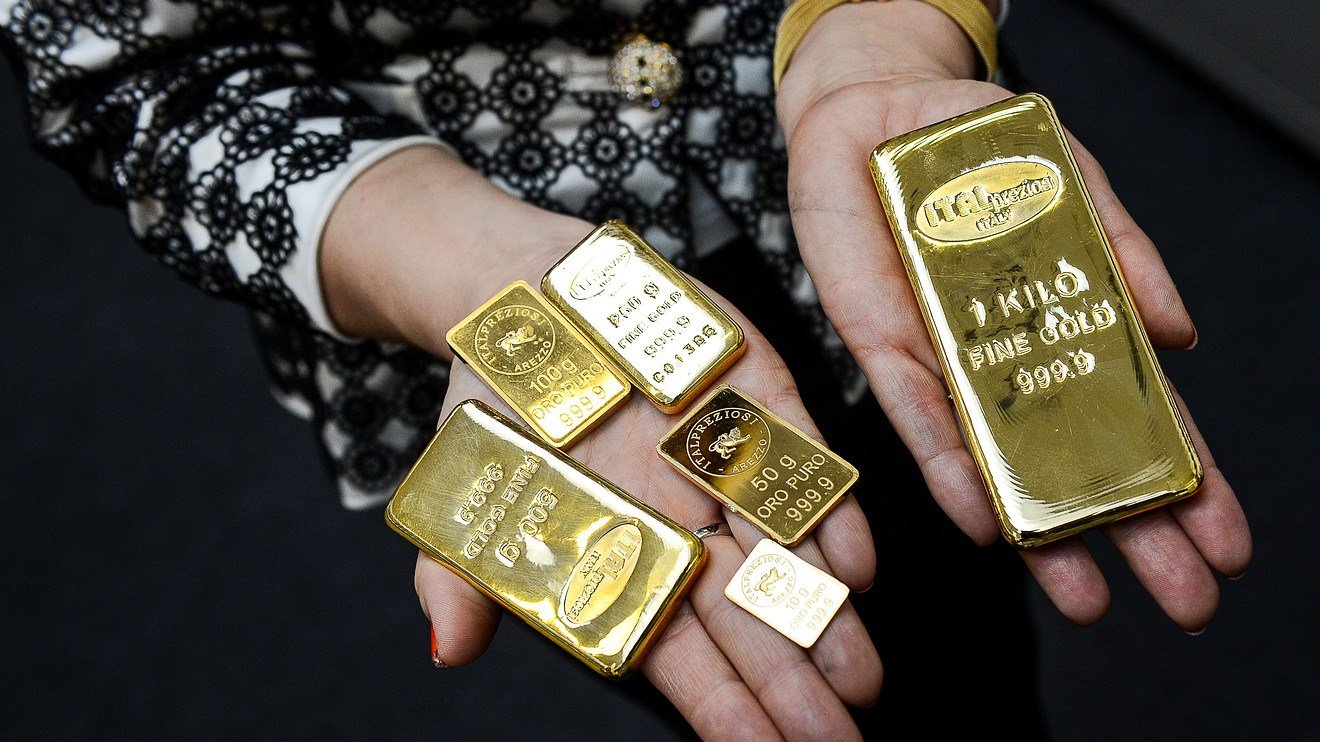
The Best Gold Bars to Buy
Three of these are still made today. Two are older brands that only trade secondhand.
1. Perth Mint gold minted bars
The Perth Mint is in Australia, and its minted bars are some of the easiest to recognize. Each one is 99.99% pure gold, struck with the mint’s logo and stamped with its weight and purity.
The back is decorated with kangaroos, and every bar comes sealed in a serial-numbered, tamper-proof display card.
Leave it in the card. A dealer will want to see it sealed when you sell.
The mint makes these in eight sizes. The 1 oz bar is the one most people start with, since the big bars cost far more than a small investor wants to tie up in a single piece of metal.
2. PAMP Suisse gold bars
PAMP stands for Produits Artistiques Métaux Précieux, or “artistic precious metals products.” Its bars are among the most well-known gold bars in existence, which is the whole appeal: you won’t have to explain to a buyer what you’re holding.
You’ll usually pay a little more for a PAMP bar than for a plainer bar of the same weight. Whether the name is worth it is up to you. The gold is the same.
3. Valcambi Gold CombiBar
This one really is different. The Valcambi CombiBar is a thin sheet of gold scored like a chocolate bar, so you can break it into 1 gram pieces.
It comes in several sizes, including 20 grams, 50 grams and 100 grams, at 999.9 fineness. The idea is that you can sell a few grams at a time and keep the rest.
You pay for the convenience, though. Small pieces of gold almost always carry a higher markup per gram than one solid bar.
4. Johnson Matthey gold bars
Johnson Matthey is an English company with a long history in metals, and its bars are trusted worldwide for their purity.
But you can’t buy a new one.
Johnson Matthey sold its gold and silver refining business to Asahi in March 2015, so every Johnson Matthey bar for sale today is secondhand. That’s fine for an investor, as long as you’re paying a normal bullion price and not a collector’s price.
5. Engelhard gold bars
Engelhard is an American name with a long history in gold and silver bullion. Many Engelhard bars carry their own serial number, which makes them easy to identify.
Same story as Johnson Matthey, though. BASF bought Engelhard in 2006, and the bars you see now are older ones being resold. Some sell for well above the value of their gold because collectors want them. If you’re buying for the metal, don’t pay for the nostalgia.
What to know before you buy a gold bar
You never pay just the gold price.
A dealer sells above the spot price (the markup is called the premium) and buys back below it. So the day you buy, you’re already down by the gap between the two.
Compare the premium on the same bar at a few dealers before you order.
Then there’s keeping it. A safe deposit box, a home safe or paid storage all cost something, and so does insurance. A bar pays no interest and no dividends while it sits there.
Taxes are different too. The IRS treats physical gold as a collectible, and long-term gains on collectibles are taxed at a maximum 28% rate, which is higher than the top rate on stocks.
Finally, watch who you buy from. The CFTC warns about dealers who charge huge markups or bill for storing metal that doesn’t exist. If someone cold-calls you about gold, promises a return, or pushes you to move your retirement account today, hang up.
The Bottom Line
Pick a common size from a brand dealers know, pay as little over spot as you can, and keep it as a small slice of your savings. Gold won’t pay your bills, and it’s not the best side hustle for most people either. Treat it as something you hold for years. The rest of the plan is in how to reach financial independence.
Sources (5)
We use primary sources: each company’s own pages, plus government sources where named.
- The Perth Mint. Minted bars. perthmint.com. Accessed October 12, 2026.
- Valcambi. Gold CombiBar. valcambi.com. Accessed October 12, 2026.
- Johnson Matthey. Sale of gold and silver refining business to Asahi. matthey.com. Dated March 5, 2015.
- CFTC. 10 Things to Ask Before Buying Physical Gold, Silver, or Other Metals. cftc.gov. Accessed October 12, 2026.
- IRS. Topic 409: Capital gains and losses. irs.gov. Accessed October 12, 2026.


